Mumbai | August 24, 2026 | INFRAINTEL Bureau
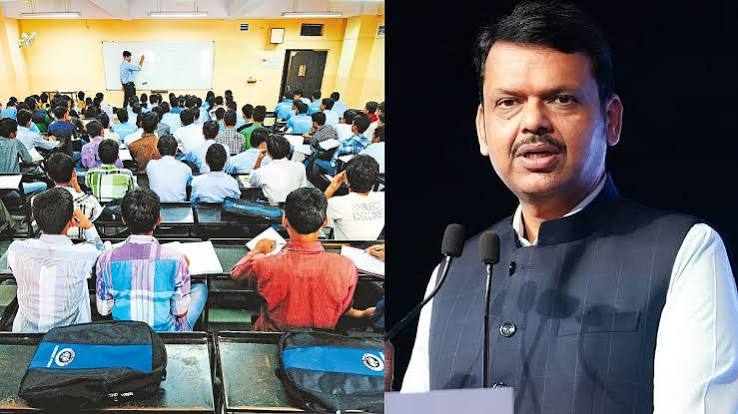
(Free Press Journal)
The Maharashtra government has proposed legislation to regulate private coaching centres through mandatory registration, limits on teaching hours and standards covering fees, infrastructure, student safety, counselling and mental health.
The draft Maharashtra Private Coaching Centers (Registration and Regulation) Act, 2026, has been published for objections and suggestions and is expected to be considered by the state government in September.
The proposed law would apply to coaching centres serving more than 25 students. Existing centres would receive six months to register after the law commences, registrations would remain valid for three years and each branch would require separate approval.
Centres would be prohibited from enrolling children below 13 years or making misleading promises about marks, ranks or admission outcomes. Tutors would need to be graduates, and persons facing a registered cognisable offence could not be employed.
Coaching providers would have to publish information on tutors, courses, fees, hours, facilities, admission capacity and refund policies. Fees could not be increased during a course, and students leaving midway would be entitled to a proportionate refund, including hostel and mess charges, within 10 days.
The draft seeks to separate coaching businesses from formal educational institutions. Centres could not operate from recognised school or college premises, employ teachers working in recognised schools or junior colleges, or enter into integrated arrangements with such institutions.
Infrastructure standards include at least one square metre of space per student, fire and building-safety certificates, ventilation, lighting, drinking water, separate toilets, first-aid facilities and parking. Basement operations would be barred, while CCTV coverage would be mandatory with footage retained for at least one month.
Classes would be limited to five hours a day and could not be scheduled unreasonably early or late. Students and tutors would receive a weekly day off, and tests could not be held on the immediately following day.
The mental-health provisions require counselling systems, wellness and life-skills support, immediate assistance for distressed students and access to information on psychologists and trained counsellors. Centres would also have to explain examination difficulty and clarify that enrolment does not guarantee success.
The draft discourages performance-based batch segregation and encourages aptitude assessment and discussion of career options beyond engineering and medicine.
Complaints involving child sexual offences or workplace sexual harassment would require action within 24 hours. Suspected offences under the Bharatiya Nyaya Sanhita would have to be reported to police, and authorities could inspect premises, obtain records and CCTV footage and, in specified cases, seize documents or electronic devices.
Proposed penalties range from Rs 1 lakh to Rs 5 lakh for minor violations and Rs 10 lakh to Rs 50 lakh for major violations, along with suspension, cancellation or closure.
The draft represents a broad attempt to regulate an influential but unevenly governed education sector. Enforcement capacity, clarity on due process, treatment of small operators and coordination with child-protection, fire-safety and consumer authorities will determine whether the law produces genuine safeguards rather than only additional registration requirements.