Ahmedabad | August 18, 2026 | INFRAINTEL Bureau
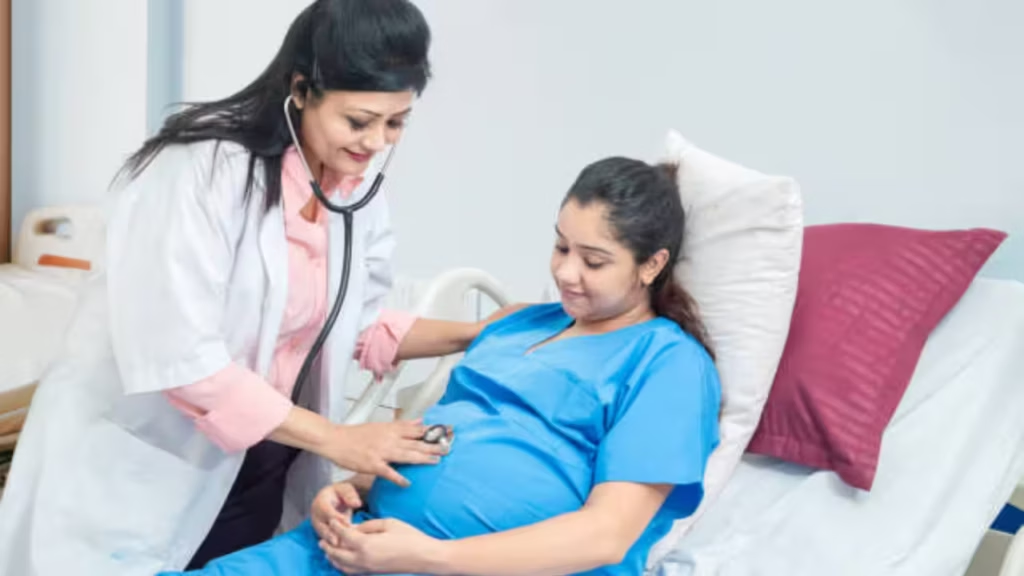
India’s progress in expanding maternal healthcare and reducing pregnancy-related deaths is being accompanied by a growing requirement for specialised treatment, with a nationwide analysis by the Indian Council of Medical Research reportedly classifying nearly half of all pregnancies in the country as high-risk.
India records approximately 88 maternal deaths for every one lakh live births, while the national objective is to reduce the ratio to 70 by 2030. With nearly three crore pregnancies and up to 2.7 crore live births annually, even a limited proportion of complicated pregnancies translates into a substantial requirement for advanced obstetric and neonatal care.
A pregnancy is generally categorised as high-risk when the mother or child faces a higher-than-normal possibility of complications. Contributing factors include maternal age, obesity, previous caesarean deliveries, multiple pregnancies and pre-existing medical conditions such as diabetes and hypertension.
Zydus Hospitals in Ahmedabad has developed specialised facilities for high-risk pregnancies and assisted reproduction. Its gynaecology and obstetrics department is supported by an in-house blood bank, gynaecological intensive care unit, neonatal intensive care unit and specialists in obstetrics, fetal medicine, anaesthesia, urology and neonatology.
Placenta Complication Required Complex Multidisciplinary Surgery
In one case, a 30-year-old woman in her second pregnancy was diagnosed with placenta previa and placenta accreta spectrum. Her previous child had been delivered by caesarean section, which is considered an important risk factor for abnormal placental attachment.
Medical examination and imaging indicated that the placenta had grown deeply into the uterine wall and extended towards the bladder. Such a condition can result in catastrophic blood loss during delivery and requires access to blood transfusion, critical care and multiple surgical specialists.
The baby was delivered through an upper-segment caesarean procedure. Doctors found that the placenta had invaded the bladder wall, requiring the participation of a urologist and an obstetric hysterectomy to control the bleeding.
Approximately 2.5 litres of blood and several units of fresh frozen plasma were administered during the operation. The mother remained in intensive care for two days. Both the mother and child subsequently recovered and were discharged after five days.
Ultra-Premature Twins Survive Following Prolonged Neonatal Care
In another case, a couple who had been trying to conceive for around 10 years approached the hospital after three unsuccessful intrauterine insemination procedures and one failed IVF cycle elsewhere.
Three embryos were transferred during a subsequent IVF procedure, and all three implanted. Following repeated bleeding during the first trimester, doctors recommended reducing the pregnancy to twins to lower the risk of severe complications.
A preventive cervical cerclage was performed at 16 weeks to support the pregnancy. The mother later developed gestational diabetes and experienced severe pain and fluid leakage at 25 weeks and four days, requiring an emergency caesarean delivery.
The twins were born weighing approximately 800 grams and 900 grams. Both required prolonged treatment in the neonatal intensive care unit because they were unable to independently regulate body temperature, breathe adequately or feed without medical support.
One of the infants developed pulmonary hypoxia and required ventilator support. Both children remained in neonatal care for nearly three months before being discharged. The hospital reported that the twins were subsequently developing well.
Abdominal Cerclage Helps Patient with Repeated Pregnancy Loss
A third patient had previously suffered three pregnancy losses during the fourth and fifth months, including two cases in which a vaginal cerclage had been placed. Doctors attributed the losses to chronic cervical insufficiency, a condition in which the cervix opens prematurely without contractions.
During her fourth pregnancy, the patient began losing amniotic fluid in the fourth month. The medical team performed a laparoscopic abdominal cerclage and placed her under continuous monitoring for infection and other complications.
Despite the loss of fluid, the pregnancy continued for another three-and-a-half months. The patient remained admitted for approximately three months and was monitored through regular blood and urine examinations with support from infectious-disease specialists.
She later delivered successfully, and both the mother and child recovered. The child has since completed one year.
In addition to high-risk pregnancy management, the Ahmedabad facility treats infertility, endometriosis, ovarian cysts, fibroids, menstrual disorders, menopause-related conditions and gynaecological and breast cancers. Similar specialist services are being expanded at Zydus facilities in Vadodara and Anand.
The cases demonstrate how multidisciplinary medical infrastructure can improve outcomes in extremely complicated pregnancies. They also highlight the uneven availability of such facilities across India, particularly outside major cities.
Expanding timely diagnosis, referral systems, emergency transport, blood-bank access, neonatal care and specialist availability will be essential if India is to achieve its maternal mortality target by 2030.