New Delhi | August 22, 2026 | INFRAINTEL Bureau
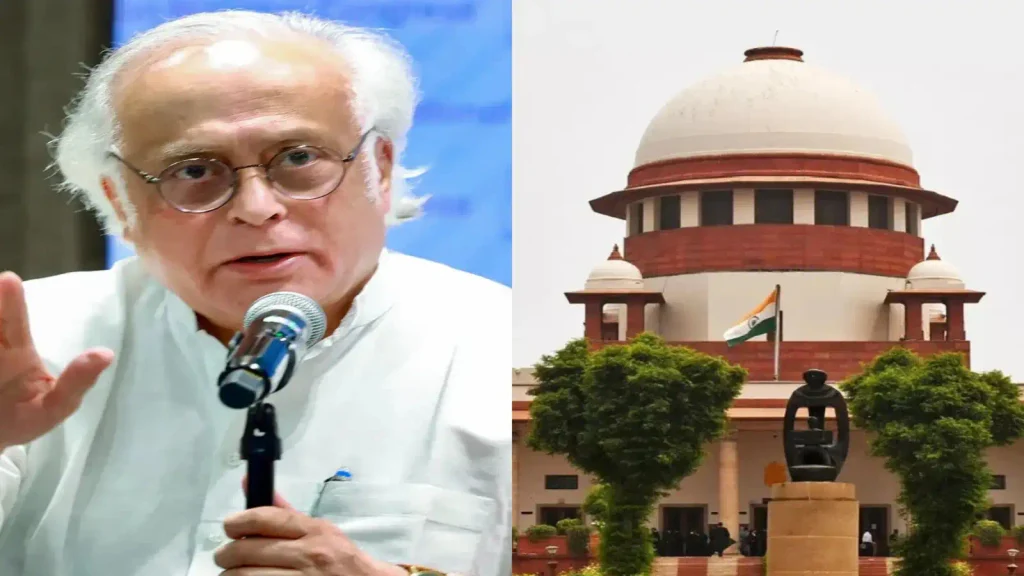
(The Economic Times)
The Congress has expressed concern over a Supreme Court judgment addressing the interpretation of the term ‘industry’ under the now-repealed Industrial Disputes Act, 1947, arguing that a narrower approach could weaken labour protections.
The judgment was delivered on August 20 in State of Uttar Pradesh versus Jai Bir Singh. A majority of the Constitution Bench refined the legal test used to determine whether an activity qualifies as an industry under the 1947 Act.
The court made clear that the refined interpretation would not disturb concluded or pending proceedings under the old law. Such proceedings will continue to be decided according to the 1978 Bangalore Water Supply and Sewerage Board versus A. Rajappa judgment.
The majority also clarified that it had not interpreted Section 2(p) of the Industrial Relations Code, 2020. The meaning of ‘industry’ under the new Code will therefore have to be considered independently when an appropriate case arises.
The 1978 judgment established a broad three-part test: the existence of systematic activity, cooperation between employer and employee and the production or distribution of goods or services intended to satisfy human wants and wishes, excluding purely spiritual or religious services.
Under that framework, the absence of a profit motive did not by itself remove an activity from the definition. Charitable institutions and public bodies could also qualify, while core sovereign functions such as defence, law and order and the administration of justice were excluded.
Chief Justice of India Surya Kant said the triple test remained valid but had been refined. The majority approach introduced consideration of whether an activity has a discernible commercial character resembling trade or business and examined the scope of sovereign functions.
Justice P. S. Narasimha agreed with the Chief Justice and observed that an authoritative interpretation of the repealed provision had lost much of its future relevance after the new Code came into being.
Justice B. V. Nagarathna dissented, holding that the 1978 judgment did not require reconsideration and cautioning against unsettling established law. Justices Dipankar Datta and Ujjal Bhuyan also concluded that reconsideration of the earlier ruling was unnecessary.
Congress general secretary in charge of communications Jairam Ramesh argued that the majority’s observations could create uncertainty before labour courts and industrial tribunals. He said a narrower interpretation of ‘industry’ could reduce the number of workers entitled to labour-law protection.
Ramesh also drew attention to the Industrial Relations Code’s provision enabling the Union government to exclude additional categories of establishments from its ambit.
The immediate legal effect of the judgment is limited because existing and pending cases under the 1947 Act remain governed by the 1978 precedent, while the court expressly did not decide the scope of the 2020 Code.
Its broader significance lies in the competing judicial approaches placed on record. Future litigation may determine how far earlier labour jurisprudence informs the new Code and how courts balance worker protection with changing models of public, private and charitable service delivery.