Lahaul-Spiti, August 19 | INFRAINTEL Bureau
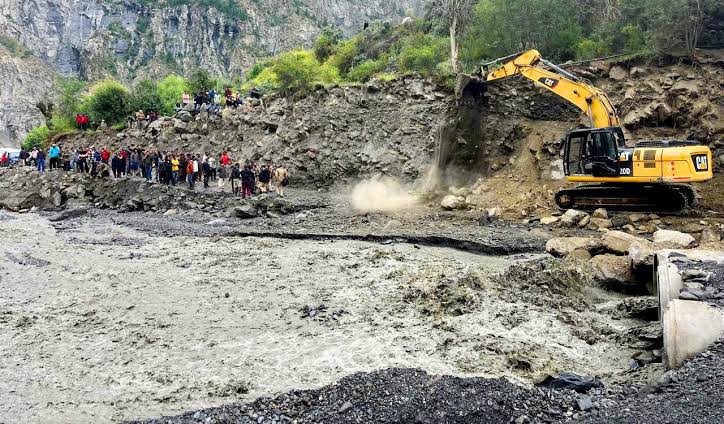
(DD India)
Flash floods in the Karpat Nallah of Miyar Valley and the Gawadi Nallah in the Chowkhang Naingar area have disrupted road connectivity in Himachal Pradesh’s tribal Lahaul-Spiti district.
The road passing through Karpat village was blocked after water and debris entered the area. However, flood-control measures undertaken earlier in Miyar Valley reportedly protected the village from more extensive damage.
Lahaul-Spiti MLA Anuradha Rana said the local administration and relevant departments had been directed to inspect the affected locations and initiate the required restoration and protective measures.
Efforts were made to restore the road in the Chowkhang Naingar area, but repeated flooding prevented the route from being reopened. Restoration work is expected to resume on Wednesday, subject to weather and site conditions.
Officials have also been instructed to assess damage to roads, protective structures, private property, agricultural land and other local infrastructure.
Road Restoration Hampered by Repeated Flooding
Continuing water flow and the movement of debris have made it difficult for road-maintenance teams to operate safely. Fresh flooding can damage repaired sections and put machinery and personnel deployed at vulnerable locations at risk.
Road blockages in Lahaul-Spiti can have a particularly serious impact because of the district’s difficult terrain, dispersed population and limited alternative routes. Even the closure of a single road can temporarily isolate villages and restrict access to healthcare, food supplies, fuel and emergency services.
Although Lahaul-Spiti had only one road officially listed as blocked in the latest statewide data, its geographical conditions mean that the local impact of the closure could remain significant.
88 Roads Remain Blocked Across Himachal Pradesh
Heavy rainfall, landslides and flash floods have continued to affect Himachal Pradesh during the ongoing monsoon season.
According to data released by the State Emergency Operation Centre on Tuesday evening, 88 roads remained blocked across the state as of 5 pm. The number had declined from 105 in the morning following restoration work.
Mandi was the worst-affected district, with 32 roads blocked. Kullu reported 25 closures, while Sirmaur had 10.
Shimla and Kangra had six blocked roads each. Chamba and Una reported four closures each, while Lahaul-Spiti had one.
The reduction in blocked roads indicates progress in restoration operations, although continuing rainfall could lead to fresh landslides, road damage and renewed closures.
Power and Water-Supply Infrastructure Also Affected
Power restoration operations also made progress during the day. The number of disrupted distribution transformers declined from 36 in the morning to 12 by the evening.
Hamirpur accounted for nine affected transformers, while Shimla reported two and Kullu one.
Rain-related incidents also disrupted 19 water-supply schemes across the state. Hamirpur reported 12 affected schemes, followed by Shimla with five and Bilaspur with two.
The simultaneous disruption of roads, electricity and water supply can intensify the impact on rural and remote communities. Road closures can also delay technical teams attempting to reach damaged power and water infrastructure.
Heavy Rainfall Forecast Until August 21
The State Meteorological Centre has forecast heavy rainfall across Himachal Pradesh until August 21. Orange and yellow alerts have been issued for several districts.
The forecast increases the possibility of further flash floods, landslides, falling rocks, road blockages and damage to local infrastructure. Residents and travellers in vulnerable areas may face sudden changes in road and weather conditions.
District administrations will need to maintain monitoring of rivers, streams, drainage channels and unstable slopes. Pre-positioning machinery, emergency teams and essential supplies near vulnerable settlements could reduce response time if fresh incidents occur.
The situation in Miyar Valley and Chowkhang Naingar demonstrates the continuing vulnerability of Himalayan road networks to short-duration, high-intensity rainfall. Long-term mitigation will require improved drainage, slope stabilisation, flood-protection structures, early-warning systems and road designs adapted to changing rainfall patterns.