Nahan, August 17 | INFRAINTEL Bureau
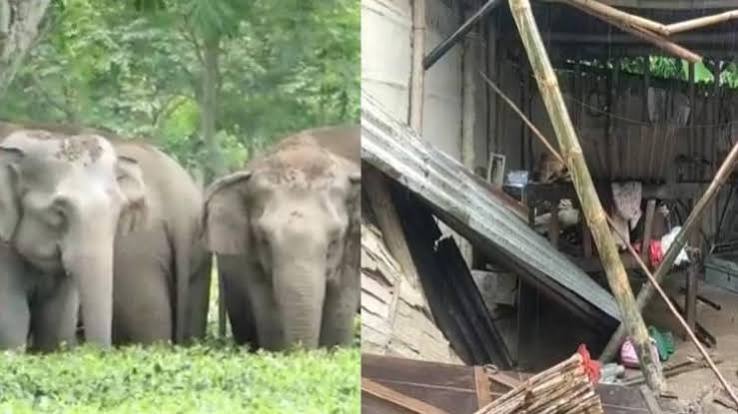
The movement of a wild elephant herd through the Paonta subdivision of Himachal Pradesh’s Sirmaur district has caused extensive damage to agricultural fields, irrigation infrastructure and residential property, creating fear among farmers and residents.
On August 14, the elephants reportedly entered Bahral village and breached the boundary wall of a house before damaging the surrounding property. No one was present inside the house at the time, preventing possible casualties.
Villagers said the herd had been moving through the area for several days and repeatedly entering settlements and agricultural land. In the Behral area, the elephants damaged a tubewell belonging to farmer Mahima Singh, resulting in a substantial financial loss and affecting access to irrigation.
In Satiwala village, the herd reportedly trampled a standing paddy crop and damaged cherry and banana trees in a field belonging to farmer Neetu Ram. The destruction of crops and fruit-bearing trees is expected to affect both the immediate and longer-term income of the affected farmer.
Residents have also alleged that elephants recently killed cows belonging to Satiwala farmers Sonu Ram and Thagga Ram. The reported loss of livestock, combined with the repeated presence of elephants near houses, has intensified concern within the local community.
Farmers said the animals had begun remaining close to residential areas, increasing the risk of human–wildlife encounters. Villagers are reportedly avoiding movement around farms and isolated stretches during vulnerable hours because of uncertainty over the herd’s location.
Bharatiya Kisan Union Block President Jaswinder Singh Billing has demanded immediate intervention by the Forest Department. He called for effective measures to prevent elephants from entering villages and agricultural areas.
Billing also sought adequate and timely compensation for farmers whose houses, irrigation facilities, crops, trees and livestock had been damaged. He warned that farmers could stage demonstrations outside Forest Department offices if preventive measures were not introduced and compensation claims were not settled promptly.
The incidents highlight the growing challenge of human–elephant conflict in areas located close to wildlife movement routes. Damage to irrigation infrastructure and standing crops can impose a considerable financial burden on small and marginal farmers, particularly during the active agricultural season.
Local authorities and the Forest Department will need to strengthen real-time monitoring of the herd, issue timely warnings to residents and deploy trained response teams in vulnerable villages. Longer-term measures may require the identification of elephant movement corridors, protection of settlements and the introduction of a faster mechanism for assessing losses and releasing compensation.